Tessera
Universe  ·  Life  ·  History
✦ The Universe◈ Life◉ Human History
March 15, 2026 — No. 1

The Terminal Present

From pulverized exoplanets to the Australian rainforest and the mass graves of Iron Age Europe, the universe is haunted by systems that have survived the destruction of their own futures.


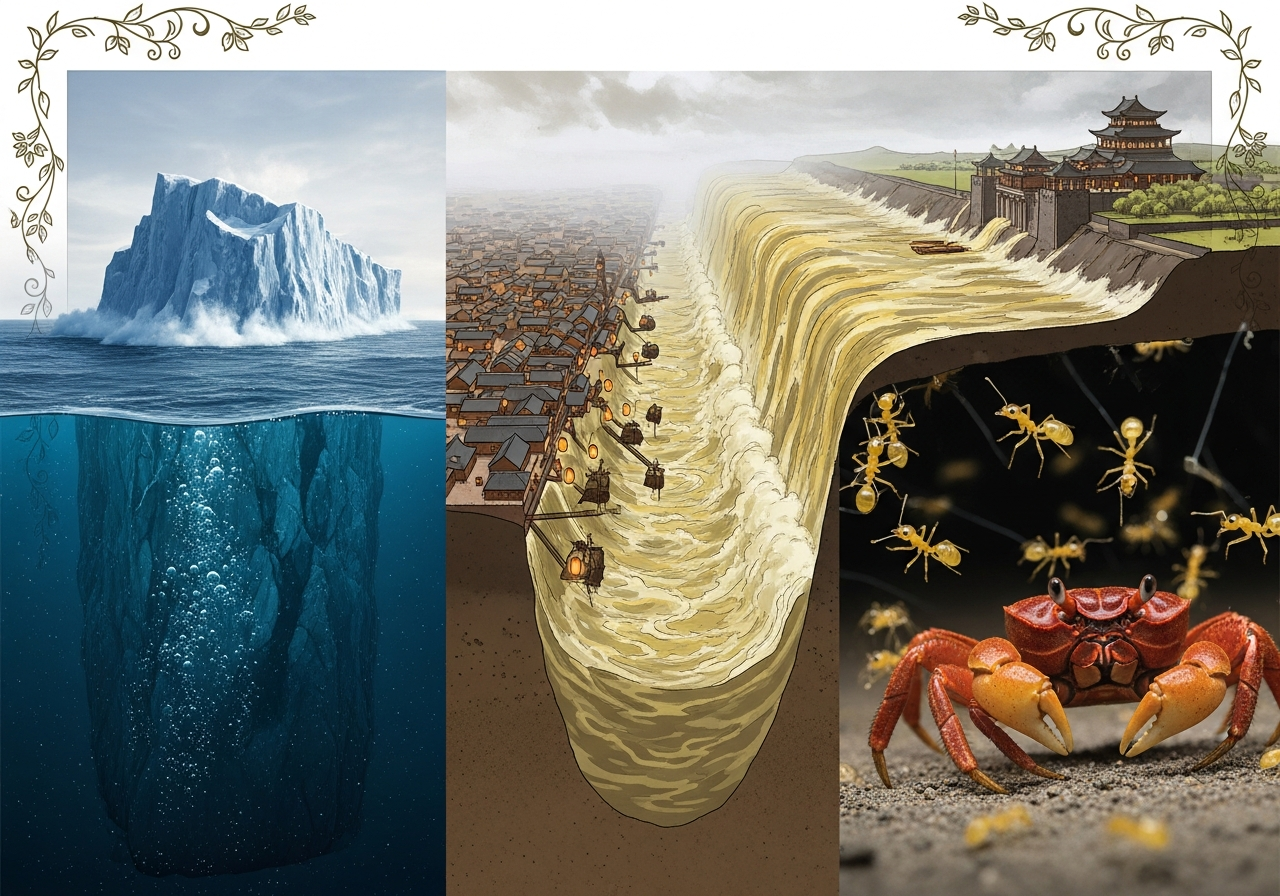
Existence is not a binary between the living and the dead—there is a terrifying third state in which entities survive the violent severing of their future.

Today’s source headlines

Astronomers Witness Aftermath of Catastrophic Planetary Collision

Scientists Warn Australia's "Zombie Tree" Could Disappear Within a Generation

Iron Age Mass Grave in Serbia Reveals Targeted Violence Against Women and Children

13 min read

The Architecture of Severed Futures

In the constellation of Puppis, 11,000 light-years from Earth, a young star has begun to flicker erratically. The starlight reaching our telescopes today carries the optical signature of a cataclysm: two ice giant planets have collided, instantly pulverizing each other into a vast, expanding cloud of vaporized rock and dust. The individual evolutionary trajectories of these two worlds have been violently terminated. Yet, they have not vanished. They have merely been forced into a new, suspended state of existence—a planetary ghost haunting its host star.

Half a world away, in the dense, humid rainforests of Australia's Burnett region, a small, dark-leaved tree stands firmly in the soil. It photosynthesizes; it respires; it draws water from the earth. But whenever the tree attempts to produce new shoots, flowers, or fruit, a bright yellow fungal pathogen attacks and kills the new growth. The tree cannot reproduce. It is biologically alive, yet functionally extinct—an organism perfectly frozen in a state of living death, isolated in a canopy it can never again hope to populate.

Beneath the soil of northern Serbia, another echo of this phenomenon was laid to rest 2,800 years ago. In an Iron Age mass grave at Gomolava, archaeologists have unearthed the remains of 77 individuals. The dead were overwhelmingly women and children, their lives ended by calculated, blunt-force blows to the head. This was not the chaotic aftermath of a battlefield; it was the deliberate eradication of a community's reproductive potential. Across the cosmos, the biosphere, and human history, we find entities that survive the destruction of their own futures. They are victims of generative severance, trapped in a terminal present.

The Universe

The Pulverized Worlds

There are only a few other planetary collisions of any kind on record, and none that bear so many similarities to the impact that created the Earth and the Moon.

For billions of years, the formation of a planetary system is a generative process of accretion, cooling, and atmospheric evolution. Planets are not static objects; they are thermodynamic engines that mature over eons. But this evolutionary march can be instantaneously arrested. In March 2026, a team led by Anastasios Tzanidakis at the University of Washington identified a young F-type star, Gaia20ehk, behaving inexplicably. A stable main-sequence star, its light curve was flat until 2016, when it began to exhibit profound dips in brightness. By 2021, the star's optical output became wildly erratic, obscured by an expanding debris field.

The source of this stellar flickering was a catastrophic collision between two major exoplanets. The energy released in such an impact defies human comprehension; the colliding bodies are subjected to pressures and temperatures that vaporize silicate rock and boil away oceans in a fraction of a second. The planets, as distinct geological entities with evolving cores, mantles, and atmospheres, ceased to exist. Their generative timeline was severed. In their place, a massive, donut-shaped cloud of hyper-heated dust and gas was left orbiting the star at approximately one astronomical unit (AU)—the same distance separating the Earth from the Sun.

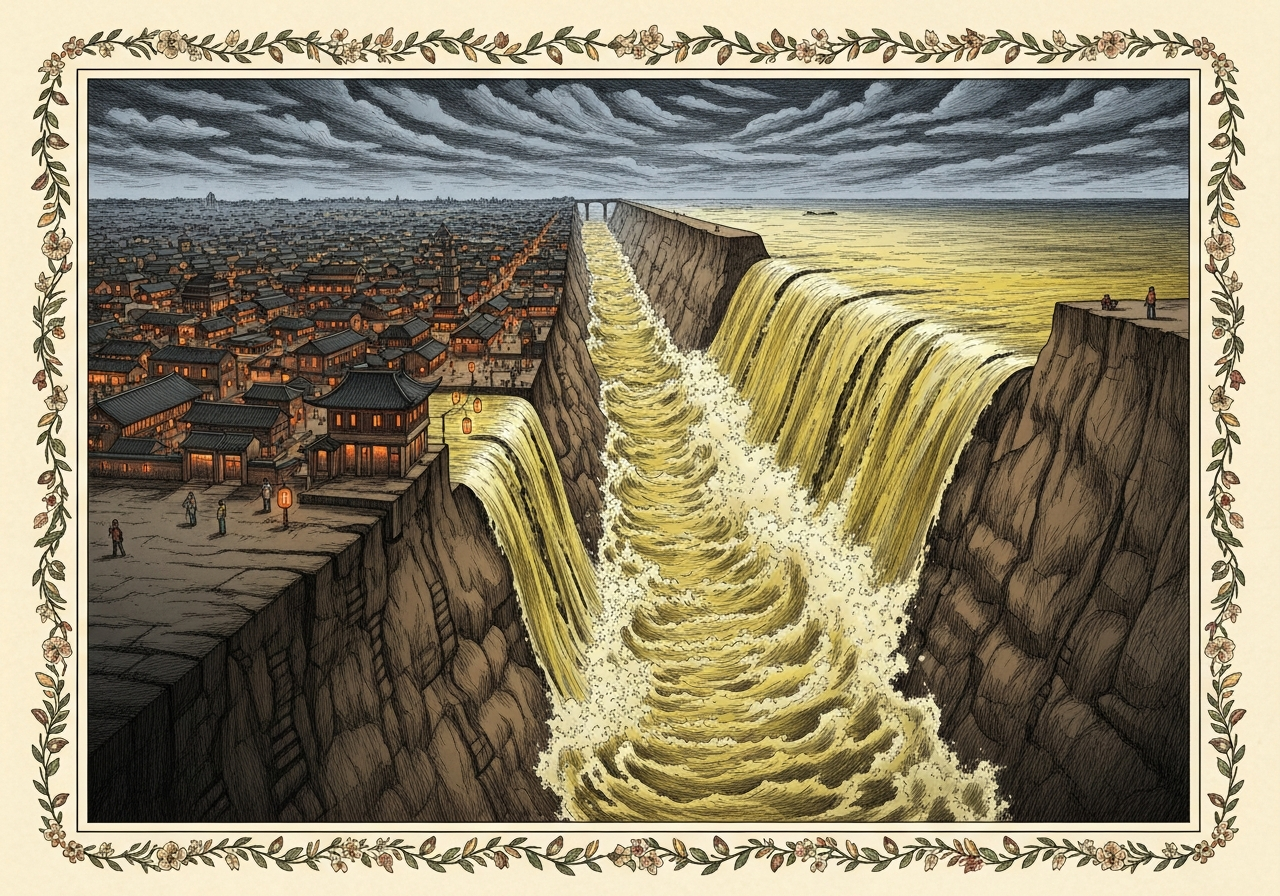
In astronomical terms, this collision represents a state of generative severance. The original planets are dead, yet their mass remains locked in the system's gravitational embrace. They have become a ghost ring, a pulverized monument to interrupted evolution. The material is currently spreading along the orbital path, blocking the starlight and creating the erratic dimming observed by telescopes on Earth. It is a violent reset of the local cosmic order, transforming complex, differentiated worlds into a homogenous cloud of raw, elemental matter.

Yet, within this terminal state of planetary destruction, the mechanics of the universe offer a cold, mechanical afterlife. The debris cloud orbiting Gaia20ehk bears striking similarities to the material disk that surrounded Earth 4.5 billion years ago, following its collision with the Mars-sized protoplanet Theia. Over immense stretches of time, the dust and vaporized rock around Gaia20ehk will cool and condense. The original planets will never return, but their shattered remains may eventually coalesce into a new Earth-Moon equivalent. The previous lineage of the ice giants was severed, but the physics of accretion ensures that the graveyard itself will eventually spin a new world into existence.

Life

The Botanical Undead

Left to its own devices, the trees in the wild really will be the living dead.

The concept of extinction is typically understood as an endpoint—the moment the last representative of a species ceases to respire. However, evolutionary biology provides a much more insidious state of non-existence: the living dead. In the Burnett region of Queensland, Australia, a newly identified species of rainforest tree, Rhodamnia zombi, embodies this horrifying biological twilight. Discovered and assessed before it even had an official scientific name, the tree has been given a moniker that perfectly describes its ecological reality. It is a zombie.

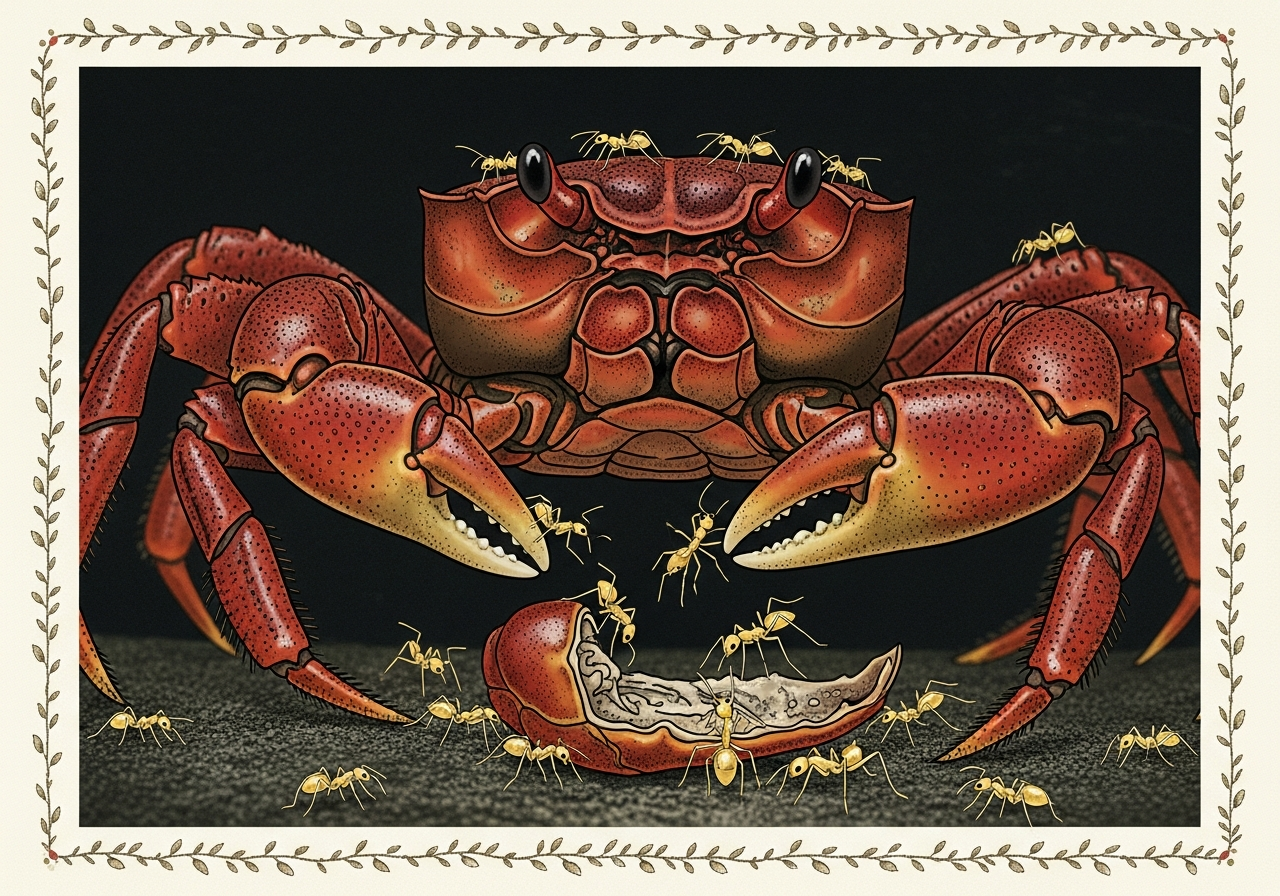
The generative severance of Rhodamnia zombi is driven by a highly specialized fungal pathogen known as myrtle rust. First detected in Australia in 2010, the bright yellow fungus systematically targets the tree's meristematic tissue—the regions of active cell division responsible for new growth. Whenever the tree attempts to push out young shoots, fuzzy white flowers, or fruit, the fungus attacks and kills the vulnerable new tissue. The mature leaves and the shaggy-barked trunk of the adult tree remain largely intact, allowing the organism to survive, photosynthesize, and persist in the understory. But its reproductive capability has been utterly annihilated.

This creates a terrifying temporal paradox in the forest canopy. To the casual observer, the trees appear alive. But from an evolutionary perspective, the lineage has already been erased. Professor Rod Fensham, a botanist at the University of Queensland, notes that since 2020, 10 percent of the wild population has succumbed to the stress, and zero percent of the remaining wild trees are reproducing. The species has been placed on a Category X list of potentially critically endangered plants. Without a mechanism to pass on genetic information, the species cannot adapt, mutate, or evolve. It is frozen in evolutionary time.

Conservationists are currently attempting to break this generative severance by taking healthy cuttings from the wild and cultivating them in highly secure, disease-free sites in Lismore and Townsville. The ambition is to artificially bypass the pathogen's castration of the species, allowing the cuttings to flower, fruit, and potentially express some dormant genetic resistance to the fungus. But in its natural habitat, Rhodamnia zombi stands as a chilling testament to the fragility of the future. The trees are breathing monuments to their own extinction.

Human History

The Severed Line

Removing women and younger individuals would have disrupted reproduction, labor, and alliances built through marriage. Genealogical lines would have been broken.

Human history is replete with conflict, but the true measure of a society's survival is not its victory in a single battle; it is the continuity of its genealogical line. When warfare shifts from the subjugation of combatants to the targeted eradication of reproduction, we witness generative severance on a sociological scale. At the Gomolava archaeological site in northern Serbia, a shallow pit dating back to the 9th century BCE offers a pristine, horrifying snapshot of this practice. Excavations have revealed a prehistoric mass grave containing the remains of 77 individuals. The demographics of the dead tell a story far darker than a standard military skirmish.

Of the 77 bodies interred in the disused semi-subterranean house, 40 were children between the ages of one and twelve. Eleven were adolescents. Of the 24 adults, 87 percent were female. The only infant identified in the grave was male. This was not the indiscriminate slaughter of a village by a rampant disease, nor was it the chaotic aftermath of a territorial defense gone wrong. Bioarchaeological analysis of the skeletal remains, led by researchers from University College Dublin and the University of Edinburgh, revealed consistent, blunt-force trauma to the backs and tops of the victims' heads, suggesting deliberate executions, possibly delivered by attackers on horseback.

The architects of the Gomolava massacre understood that to permanently eliminate a rival community in the shifting power dynamics of the Carpathian Basin, they did not need to kill the adult men. By targeting the women and children, the attackers surgically removed the community's capacity to regenerate. They disrupted future labor forces, shattered the potential for political alliances built through marriage, and erased the kinship networks that bound the society together. Strontium isotope analysis and DNA testing revealed that the victims were a heterogeneous group—many were not even distantly related, suggesting they were forcibly displaced or captured from various settlements before their mass execution.

Yet, the burial itself was not a chaotic dumping of bodies. The dead were laid to rest with a degree of care. They were not stripped of their valuables; bronze ornaments, ceramic drinking vessels, and broken grain-grinding stones were placed over the bodies, alongside the butchered remains of a calf as an offering. This respectful interment—likely conducted by the surviving men of the community, or perhaps by the attackers themselves as a ritualistic assertion of power—highlights the finality of the act. The survivors were allowed to bury their dead, but in doing so, they were burying their own future.

The Gomolava grave is a monument to a severed lineage. The community that survived that day in the Early Iron Age was left in the exact same state as the Rhodamnia zombi tree: biologically alive for the duration of a single generation, but historically and genealogically dead. Their timeline was violently arrested, turning the surviving men into the walking ghosts of a society that no longer had a tomorrow.

The Synthesis

The Ghosts of the Present

We operate under the comforting illusion that existence is a binary state: an entity is either thriving in the present and moving into the future, or it has been destroyed and relegated to the past. But the pulverized exoplanets of Gaia20ehk, the sterile canopy of Australia’s zombie tree, and the eradicated lineages of Iron Age Serbia force us to confront a terrifying third state. Generative severance reveals that the future can be destroyed long before the present collapses. A system can be hollowed out, stripped of its capacity to replicate, evolve, or adapt, while its outer shell remains entirely intact.

This phenomenon requires us to reevaluate the metrics by which we measure survival. In astronomy, the survival of mass does not equate to the survival of a world. In ecology, the survival of an adult organism does not equate to the survival of a species. In human society, the survival of individuals does not equate to the survival of a civilization. When the generative mechanisms are broken—whether by the brute physics of a planetary collision, the hyper-specialization of a fungal pathogen, or the calculated cruelty of Bronze Age warlords—the remaining entity becomes an artifact of itself. It occupies a terminal present.

The implications for our modern world are profound. As we look at the creeping effects of climate change, the collapse of global biodiversity, and the demographic inversions facing advanced economies, we must ask ourselves which of our systems have already suffered generative severance. How many of our institutions, ecosystems, and societal structures are simply walking dead—functioning day-to-day, maintaining the appearance of vitality, while having quietly lost the capacity to generate a viable future?

To recognize the zombie trees and the severed lineages of our time is to understand the true anatomy of collapse. Destruction is rarely an instantaneous vanishing. More often, it is a quiet severing of the thread that connects today to tomorrow, leaving us to inhabit the ghosts of our own pulverized worlds, waiting for the dust to finally settle.