Tessera
Universe  ·  Life  ·  History
✦ The Universe◈ Life◉ Human History
The Narrowing World
March 27, 2026 — No. 3

The Narrowing World

From the volcanic conduits of Kilauea to the geopolitics of the Strait of Hormuz, the hidden architecture of bottlenecks dictates the survival and collapse of complex systems.


Whether it’s global oil transit, magma dynamics, or a butterfly’s migration, our most efficient systems are fundamentally designed to shatter at their narrowest points.

Today’s source headlines

Strait of Hormuz Blockade Tensions Threaten Global Energy Security (March 26, 2026)

Photo & Video Chronology — March 25, 2026 — Kīlauea summit monitoring overflight (March 25, 2026)

March 2026 Wildlife Column: Monarch Butterflies' Northward Journey (March 24, 2026)

14 min read

The Anatomy of the Chokepoint: How Bottlenecks Govern the Universe, Life, and Human History

We live in an era defined by the illusion of boundless flow. Information spans the globe in milliseconds, global supply chains promise infinite abundance, and the natural world appears as an endlessly circulating web of energy and life. Yet, beneath this veneer of continuous motion lies a structural reality governed by strict physical and geographic constraints. If you trace any system of immense scale—whether it is the subterranean churn of a volcano, the intercontinental migration of an insect, or the circulatory system of the global economy—you will eventually find a point where the vastness abruptly narrows. You will find a bottleneck. It is in these narrow passages that the true mechanics of a system are revealed, and it is here that they are most prone to shattering.

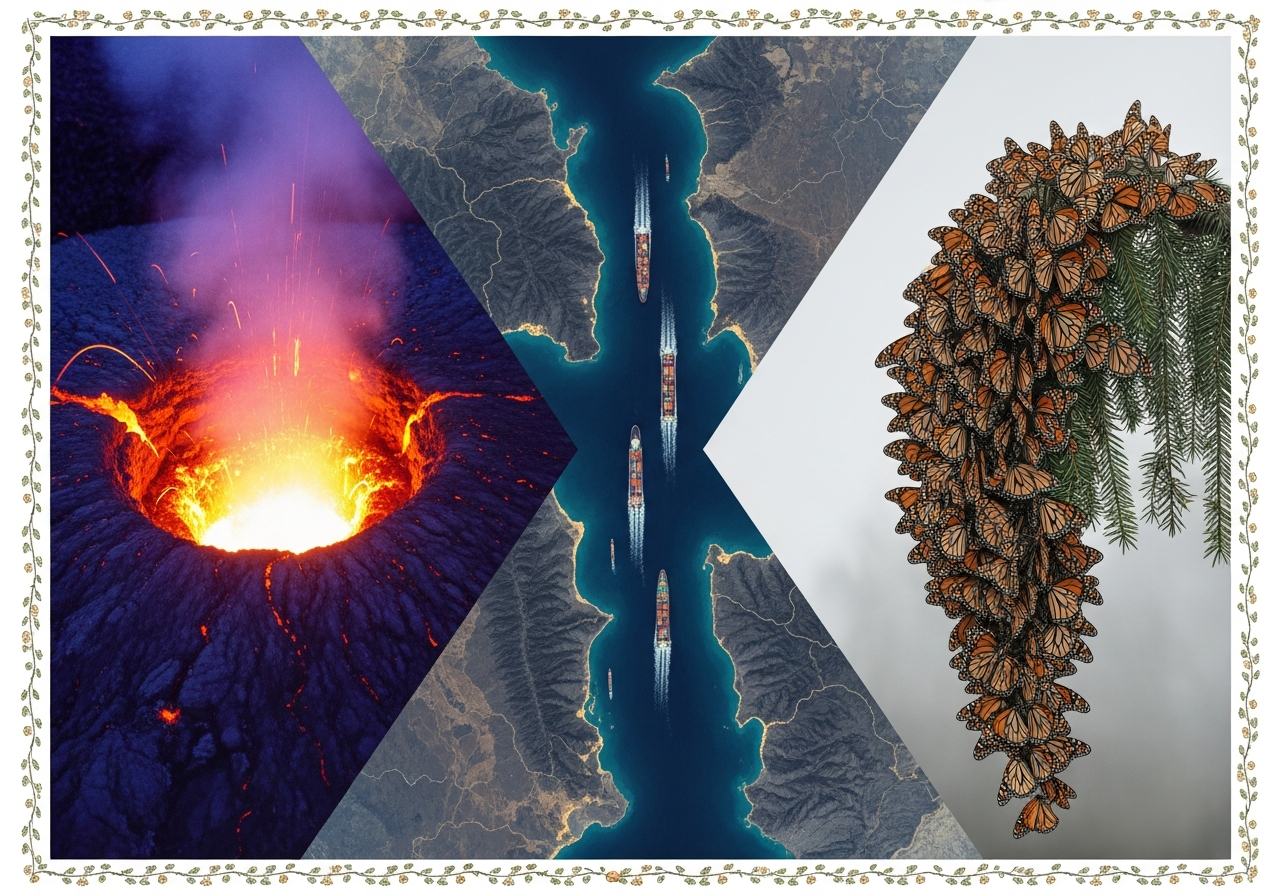
This week, the world’s attention has been drawn to three distinct events that, on their surface, share no common denominator. In the Middle East, escalating geopolitical tensions threaten to blockade the Strait of Hormuz, a maritime corridor just twenty-one miles wide that commands the fate of the global energy supply [1][2]. In the Pacific, geologists conducting a routine helicopter overflight of the Kilauea volcano peered into the actively degassing vents of Episode 43, observing the narrow magmatic conduits that dictate the mountain's explosive fury [3]. And in the highlands of Michoacán, Mexico, biologists watched millions of Monarch butterflies begin their northward journey, funneling out of a microscopic fraction of forest that serves as the species' sole bulwark against winter extinction [9][10].

The hidden thread binding these headlines is the profound, structural reality of the chokepoint. Across the dimensions of the universe, life, and human history, systems naturally evolve toward efficiency, channeling vast inputs through incredibly narrow conduits. These bottlenecks act as the great valves of reality. They accelerate flow, reduce friction, and conserve energy, making complex systems possible. However, this architecture requires a dangerous wager. When a bottleneck is squeezed—by the collapse of a magma foam, the warming of a microclimate, or the deployment of anti-ship missiles—the entire system behind it begins to suffocate. By examining the physics, biology, and history of the chokepoint, we can begin to understand why our most highly optimized systems are also our most fragile.

The Conduit
The Universe

The Conduit

The volcano is not a balloon that simply pops; it is a complex, pressurized plumbing system governed by the mathematical limits of its narrowest pipes.

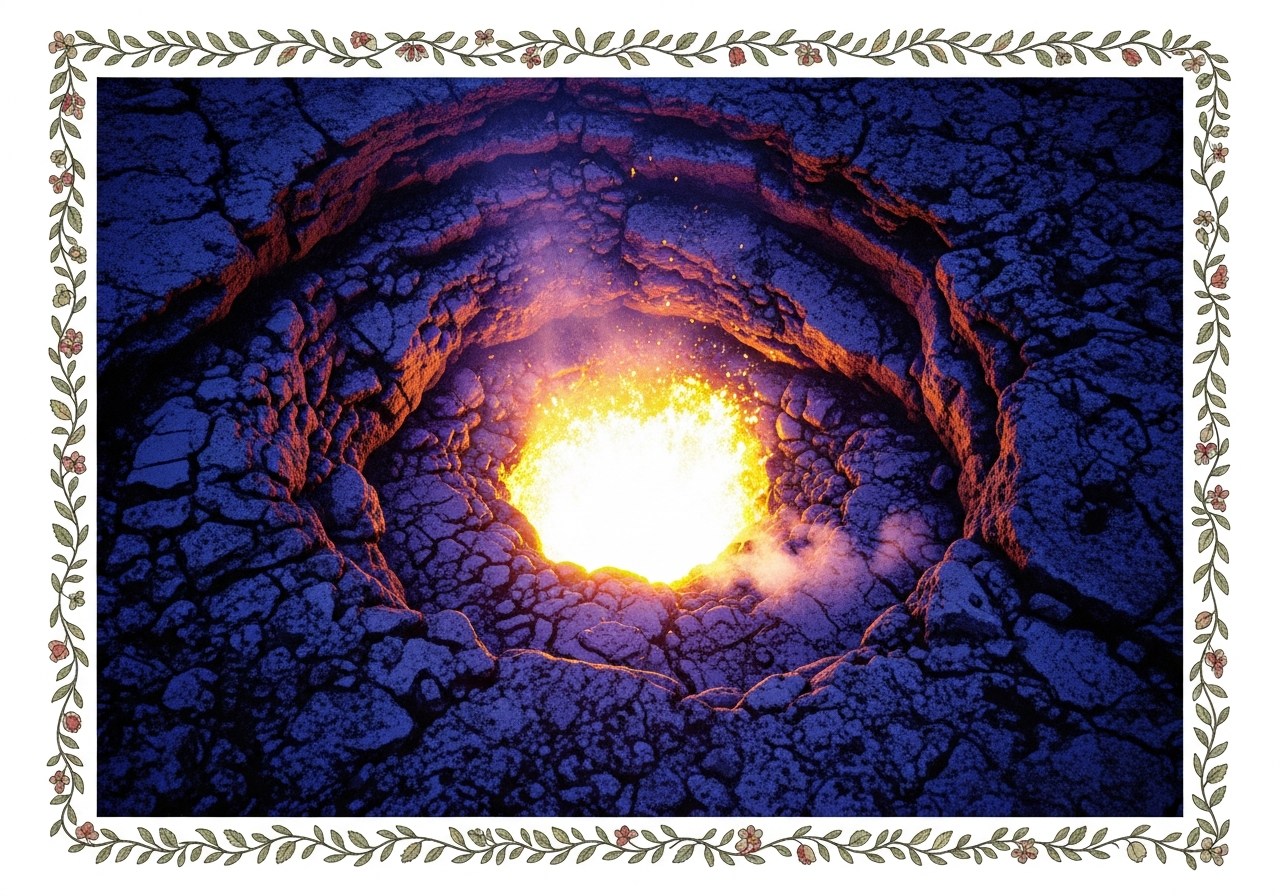
On March 25, 2026, geologists from the U.S. Geological Survey’s Hawaiian Volcano Observatory conducted a monitoring overflight of the Kilauea summit, capturing thermal and visual data of the active north and south vents following the intense lava fountaining of Episode 43 [3][11]. Looking down into the misty caldera, they observed robust gas plumes and deep, weak spattering within the south vent, framed by an edifice dusted with yellow sulfur crystals [3][12]. What these geologists were observing was not merely a hole in the earth, but the terminal end of a highly constrained magmatic bottleneck. Deep beneath Kilauea lies a vast, interconnected magma reservoir, holding an estimated 240 cubic kilometers of molten rock [13]. Yet, for this immense volume of material to reach the surface, it must traverse narrow, vertical fissures and conduits. The behavior of the entire volcano—whether it erupts in a gentle, effusive flow or a violent fountain of fire—is dictated almost entirely by the fluid dynamics within this narrow, subterranean choke valve.

To understand the physics of a volcanic bottleneck, one must look to the mechanics of “separated two-phase flow.” As magma ascends from the deep reservoir, decreasing pressure allows dissolved volatiles—primarily water vapor, carbon dioxide, and sulfur dioxide—to exsolve, forming bubbles [14][15]. In the foundational experimental models developed by fluid dynamicists Sylvie Vergniolle and Claude Jaupart, gas bubbles rising through a magma chamber accumulate at the roof, forming a dense foam layer just beneath the narrow entrance to the eruptive conduit [16]. The conduit acts as a strict physical bottleneck, unable to accommodate the total volume of ascending gas and liquid simultaneously.

The stability of this system depends on a fragile dynamic balance. Vergniolle and Jaupart demonstrated that the maximum permissible thickness of this foam layer is dictated by a strict mathematical threshold: the foam collapses when it exceeds a critical thickness, defined by the liquid's surface tension, its density, the bubble radius, and the gas volume fraction [4]. When the gas flux from below exceeds the conduit's capacity to vent it smoothly, the foam layer undergoes a catastrophic collapse. This collapse funnels a massive, pressurized gas slug into the narrow conduit [4][8]. As the slug ascends, it expands violently in the confined space, displacing the magma above it and resulting in the dramatic, rhythmic “gas piston” events and fire-fountaining observed during Kilauea's most destructive episodes [16].

Furthermore, as the mixture of magma and gas accelerates up the narrowing conduit, it approaches a fundamental limit known as “choked flow.” In fluid dynamics, when a compressible fluid passes through a restriction, its velocity increases while its pressure drops. However, the flow velocity cannot exceed the local speed of sound within that specific gas-magma mixture. Once this acoustic velocity is reached at the bottleneck, the flow becomes choked; no matter how much pressure builds in the reservoir below, the mass flow rate through the conduit cannot increase. The bottleneck absolutely caps the system's output [14][17]. If tectonic forces or ongoing magma supply continue to inject material into the reservoir faster than the choked conduit can release it, the pressure inevitably fractures the surrounding rock, leading to flank eruptions, dyke intrusions, or catastrophic caldera collapses, such as those witnessed at Kilauea in 2018 [18][19].

Ultimately, the March 2026 overflight of Kilauea offers a visual testament to the power of physical strictures [3][20]. The volcano is not a balloon that simply pops; it is a complex, pressurized plumbing system governed by the mathematical limits of its narrowest pipes [21][22]. The conduit teaches us that immense scale is subordinate to the smallest geometry. The entire energetic output of a tectonic hotspot, drawing heat from the deep mantle, is ultimately bottlenecked, regulated, and weaponized by a conduit no wider than a city street.

The Needle's Eye
Life

The Needle's Eye

In the theater of evolutionary biology, a species can conquer a continent, but if it cannot successfully navigate the narrowest point of its annual cycle, it will face extinction.

While geologists measure the physical constraints of rock and magma, ecologists observe a parallel phenomenon in the architecture of life. In late March 2026, biologists noted the departure of the Monarch butterflies (Danaus plexippus) from their winter sanctuaries, beginning their grueling multi-generational migration northward across the North American continent [9]. The sheer scale of this migration is one of the natural world's greatest spectacles. Hundreds of millions of butterflies fan out across the United States and Canada during the summer, occupying millions of square miles of habitat. Yet, when autumn arrives, this vast, continent-spanning population is funneled into a geographic and climatic bottleneck so narrow it defies belief. The entire eastern population overwinters in just a few isolated hectares of Oyamel fir (Abies religiosa) forest in the Trans-Mexican Volcanic Belt [5][23].

This overwintering site acts as a microscopic needle's eye through which the entire genetic legacy of the species must pass each year. The Oyamel fir forest provides a highly specific microclimate that is essential for the butterflies' survival. The forest canopy acts simultaneously as a blanket and an umbrella; it moderates the extreme temperatures of the high altitude (2,800 to 3,500 meters) and shields the dormant insects from winter precipitation [10][23]. The parameters of this biological bottleneck are ruthlessly strict. If the temperature drops too low, the butterflies freeze—studies show that 50 percent of monarchs will die at -4ºC if they are wet, and 100 percent are killed at -7ºC [10]. Conversely, if the temperature is too warm, the butterflies break their reproductive diapause prematurely, burning through the lipid energy reserves they desperately need to fuel their spring migration back to the Gulf Coast [10].

Evolution has gambled the survival of an entire species on the absolute stability of this tiny geographic bottleneck. For millennia, the gamble paid off, as the high-altitude firs provided a reliable, stable refuge. Today, however, human-driven climate change is rapidly shrinking the bottleneck. Predictive models suggest that the suitable climatic habitat for the Oyamel fir will practically vanish by the year 2090, ascending higher up the mountains until it is pushed off the peaks entirely [5][6][24]. As the forests die, the microclimatic umbrella collapses, exposing the clustering monarchs to lethal winter storms and metabolic starvation. The needle's eye is closing.

Faced with the collapse of this ecological chokepoint, scientists have proposed an unprecedented intervention. Forest geneticist Cuauhtémoc Sáenz-Romero and his team have initiated an “assisted migration” program, attempting to manually move the bottleneck to safer ground [5][25]. By collecting seeds from the existing Monarch Butterfly Biosphere Reserve and germinating them in nurseries, they have begun planting Oyamel seedlings under the shade of native “nurse shrubs” on the higher, colder slopes of the nearby Nevado de Toluca volcano [5][24]. Their research demonstrates that upward transfer of these seed sources by up to 400 meters yields a 70 percent survival rate over three years, effectively engineering a new high-altitude refuge for the firs—and the butterflies—for the coming century [23][24].

The plight of the Monarch reveals the terrifying fragility of ecological bottlenecks. Biodiversity often relies on these highly concentrated spatial and temporal nodes to survive periods of extreme environmental stress. By optimizing their life cycle to exploit a single, highly efficient microclimate, the Monarchs inadvertently sacrificed their resilience to localized change [6][26]. In the theater of evolutionary biology, a species can conquer a continent, but if it cannot successfully navigate the narrowest point of its annual cycle, it will face extinction. Life, like magma, is ultimately at the mercy of the conduit.

The Strait
Human History

The Strait

The infamous Trojan War is now understood by many historians not as a romantic conflict over a stolen queen, but as a desperate 'Trade War' to break a geographic bottleneck.

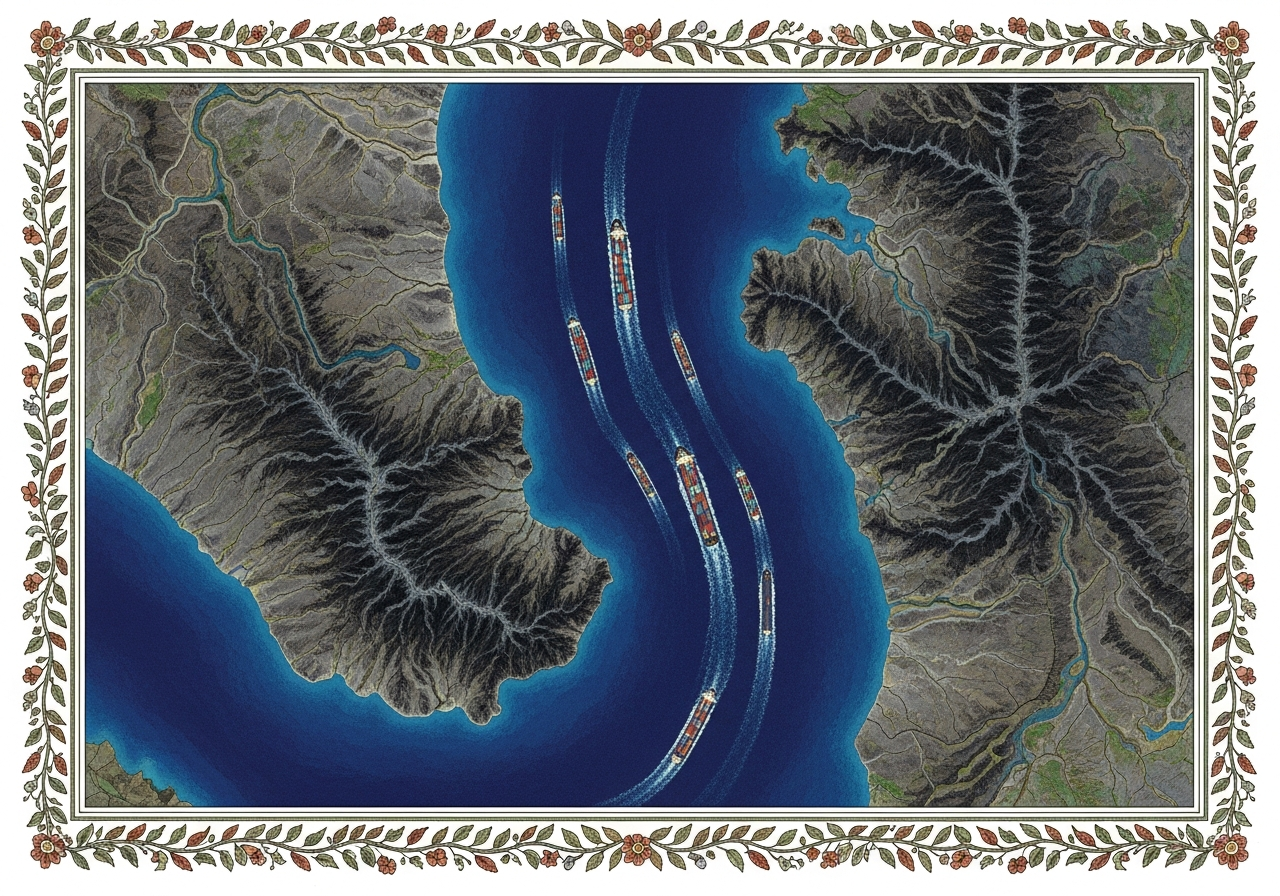
The vulnerability inherent in physical conduits and biological sanctuaries finds its most destructive expression in human history. During the week of March 26, 2026, global financial and energy markets were rattled by escalating tensions in the Strait of Hormuz, driven by the ongoing geopolitical conflict between the United States, Israel, and Iran [2][27][28][29]. The Strait of Hormuz is the quintessential geographic bottleneck. Separating Iran from the Musandam Peninsula of Oman and the UAE, the waterway is just 21 miles wide at its narrowest point [30][31]. Through this tiny fracture in the Earth's crust passes roughly 20 percent of the world's daily petroleum consumption—upwards of 20 million barrels of oil—and over 25 percent of the global supply of liquefied natural gas (LNG) [2][32][33].

The mechanics of this maritime chokepoint mirror the strictures of a volcanic vent. Because the waters are treacherous, filled with strong tidal currents and unpredictable swells, massive Very Large Crude Carriers (VLCCs) cannot move freely [31][34]. They are forced into a strict traffic separation scheme: inbound and outbound vessels must navigate lanes that are only two miles wide, separated by a two-mile buffer [31][35]. This extreme concentration of capital and energy renders the global economy highly vulnerable to asymmetric warfare. A fleet of fast-attack craft, naval mines, or inexpensive drones can effectively paralyze the flow of resources, acting as a geopolitical choke valve [1][31]. Analysts project that a prolonged closure of the Strait would remove 14 million barrels per day from global supply, triggering massive price premiums, spiking inflation worldwide, and crippling industrial economies [2][33].

This dynamic is not a modern anomaly; human civilization has always been structured around the control and vulnerability of bottlenecks. The earliest recorded systemic collapse in human history—the Late Bronze Age Collapse, around 1200 BCE—was driven largely by the strangulation of trade chokepoints [36][37]. The great empires of the era (the Mycenaeans, Hittites, Assyrians, and Egyptians) were highly interdependent, relying on a steady flow of copper from Cyprus and tin from Afghanistan to forge bronze, the lifeblood of their military and agricultural power [7][38]. Because tin was exceedingly rare, it had to be transported via vast donkey caravans across thousands of miles.

These trade routes were highly efficient but passed through critical geographic bottlenecks. Tin caravans moving westward had to cross the plains of Northern Mesopotamia and funnel through the city of Emar on the Euphrates River, where Assyrian merchants extracted heavy taxes and wielded a veto over the survival of rival empires [37][38]. Similarly, the city of Troy (known to the Hittites as Wilusa) controlled the Dardanelles, the narrow strait linking the Aegean to the Black Sea [37][39]. The infamous Trojan War, culminating in the violent destruction of Troy VIIa around 1180 BCE, is now understood by many historians not as a romantic conflict over a stolen queen, but as a desperate “Trade War.” The Mycenaeans, facing the strangulation of their eastern supply lines, launched a massive assault to break the bottleneck of the Dardanelles and secure alternative metal reserves [37][38][40].

When these critical bottlenecks were disrupted by shifting alliances, piracy, and local warfare, the highly optimized Bronze Age economies suffocated. Deprived of the materials needed to maintain their infrastructure and military, the centralized palatial economies shattered, plunging the Mediterranean into centuries of dark ages [37][39]. The echoes of Troy resound in the waters of Hormuz today. The illusion of a robust, globalized economy masks a profound vulnerability: our sprawling, hyper-connected networks still rely on a handful of narrow straits, canals, and pipelines. When the flow is halted at the source, the empire starves.

The Synthesis

The Fragility of Efficiency

The physics of ascending magma, the biology of a migrating butterfly, and the geopolitics of maritime commerce seem to belong to entirely separate disciplines. Yet, when viewed through the lens of structural geometry, they reveal a universal principle: complex systems relentlessly optimize for efficiency, and efficiency invariably creates bottlenecks [1][14][41]. A volcanic conduit is an efficient mechanism for the Earth to release deep internal heat. The Oyamel fir forest is an incredibly efficient microclimate for conserving insect lipid reserves. The Strait of Hormuz is the most economically efficient route to transport Middle Eastern crude to Asian markets.

However, this systemic drive toward efficiency comes at a steep, hidden cost: the absolute sacrifice of resilience. By funneling vast quantities of pressure, life, or capital through a single narrow passage, a system abandons redundancy. It places its survival entirely in the hands of the choke valve. In physics, when the bottleneck's capacity is exceeded, the result is a catastrophic rupture—a caldera collapse or a fire fountain. In biology, when the microclimate of the bottleneck degrades, the result is a population crash or extinction. In geopolitics, when a maritime strait is blockaded, the result is supply chain paralysis and the potential collapse of imperial hegemony.

As we navigate the crises of the mid-21st century, recognizing the architecture of the chokepoint is no longer an academic exercise; it is an imperative for survival. Our modern civilization has built the most highly optimized, deeply entangled systems in human history, but we have largely ignored the vulnerability of our bottlenecks. We rely on a handful of semiconductor factories, a few critical maritime straits, and a rapidly shrinking number of stable climatic zones. The lesson from the Kilauea vents, the Mexican highlands, and the ruins of Bronze Age Troy is stark and unforgiving.

If we cannot intelligently map, protect, and build redundancies around our structural bottlenecks, nature and history will eventually do it for us. The pressure will continue to build, the flow will choke, and the systems we rely upon will shatter, seeking a new, more painful equilibrium. To survive the coming decades, we must deliberately engineer resilience back into our world, even if it requires sacrificing the perilous, intoxicating speed of maximum efficiency.