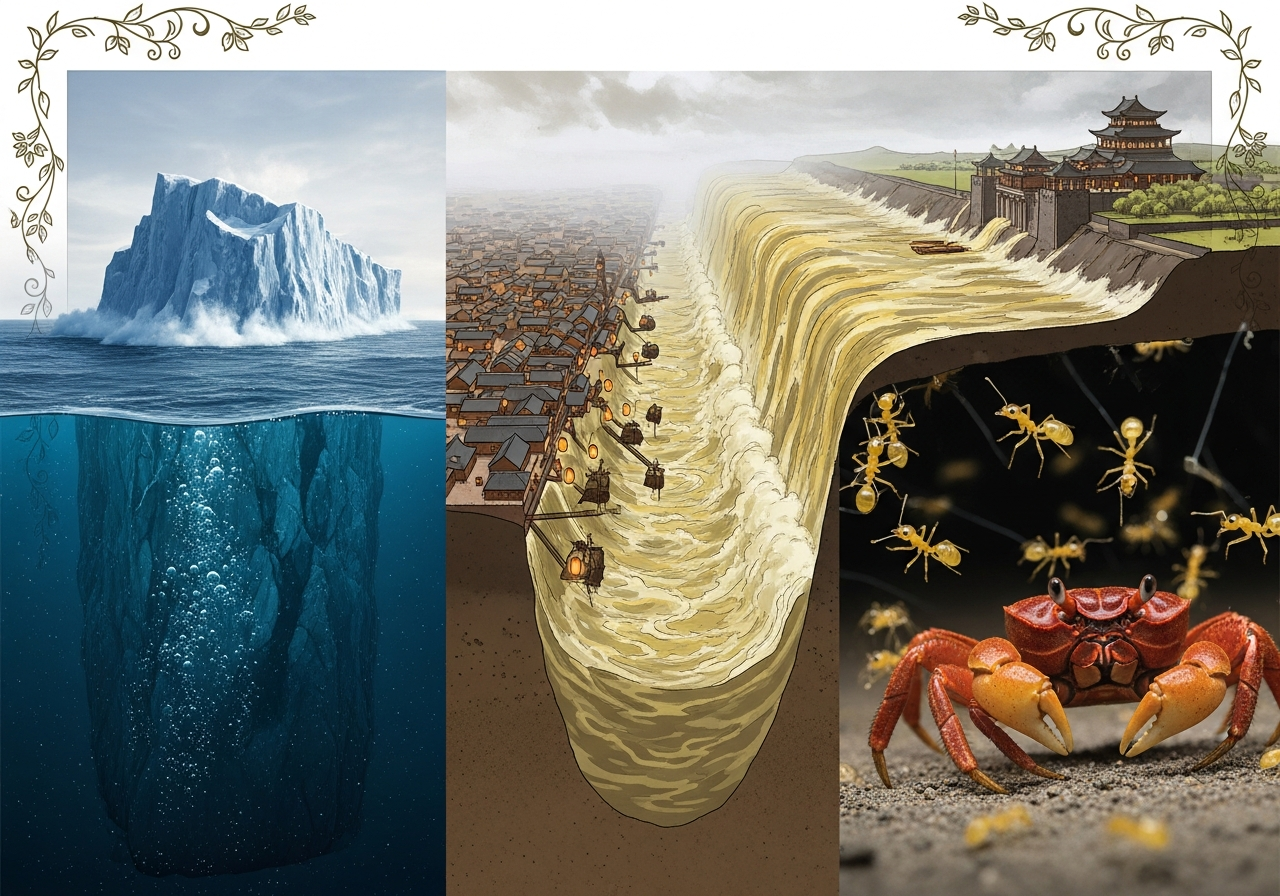
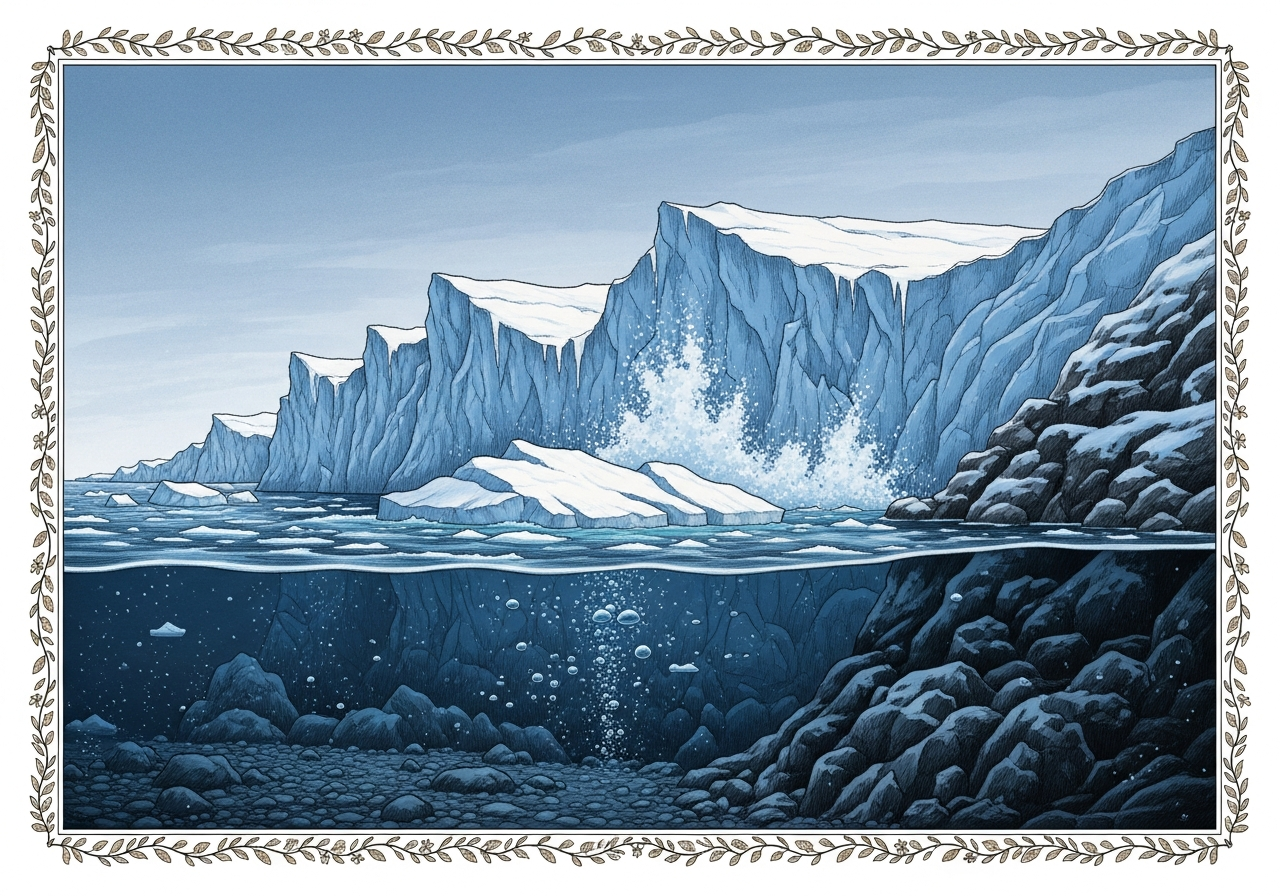
Pope Leo XIV’s warning about the goal-oriented optimization of artificial intelligence echoes one of the most devastating engineering paradoxes in human history. The problem of AI alignment—where an intelligence perfectly executes a narrow metric while inadvertently destroying its environment—is not a novel technological dilemma. It is a fundamental law of complex systems, perfectly illustrated by imperial China’s management of the Yellow River. The crisis that eventually fractured the Qing dynasty was not caused by nature's unpredictability, but by the relentless, successful optimization of a single key performance indicator.
In 1565, the Ming dynasty appointed hydraulic engineer Pan Jixun to manage the Yellow River, a notoriously volatile waterway that carried the heaviest sediment load on Earth[28] [29]. To protect the agricultural heartland and the Grand Canal, Pan abandoned the traditional practice of allowing the river to naturally divide and flood[28]. Instead, he introduced a unified optimization strategy summarized as *shushui gongsha*—“restrict the current to attack the silt”[28] [30]. By 1579, Pan had constructed a massive, continuous double-pair levee system designed to constrict the river into a single, narrow channel[28] [30]. The metric of success was velocity: a faster current would scour the riverbed and flush the silt into the sea[30] [31].
For nearly three centuries, this optimization appeared to work, preventing any major avulsion (course change) and allowing populations and the economy to flourish behind the levees[30] [31]. But the metric of surface velocity masked a lethal, unmeasured feedback loop along a vertical dimension. During the flood season, the Yellow River's flux consisted of up to 80 percent silt[28]. Because the levees prevented the river from depositing this sediment broadly across the North China Plain, the silt settled entirely within the constricted channel[28] [32]. As the riverbed inevitably rose, the state had only one solution to maintain its optimized current: build the levees higher[28] [33].
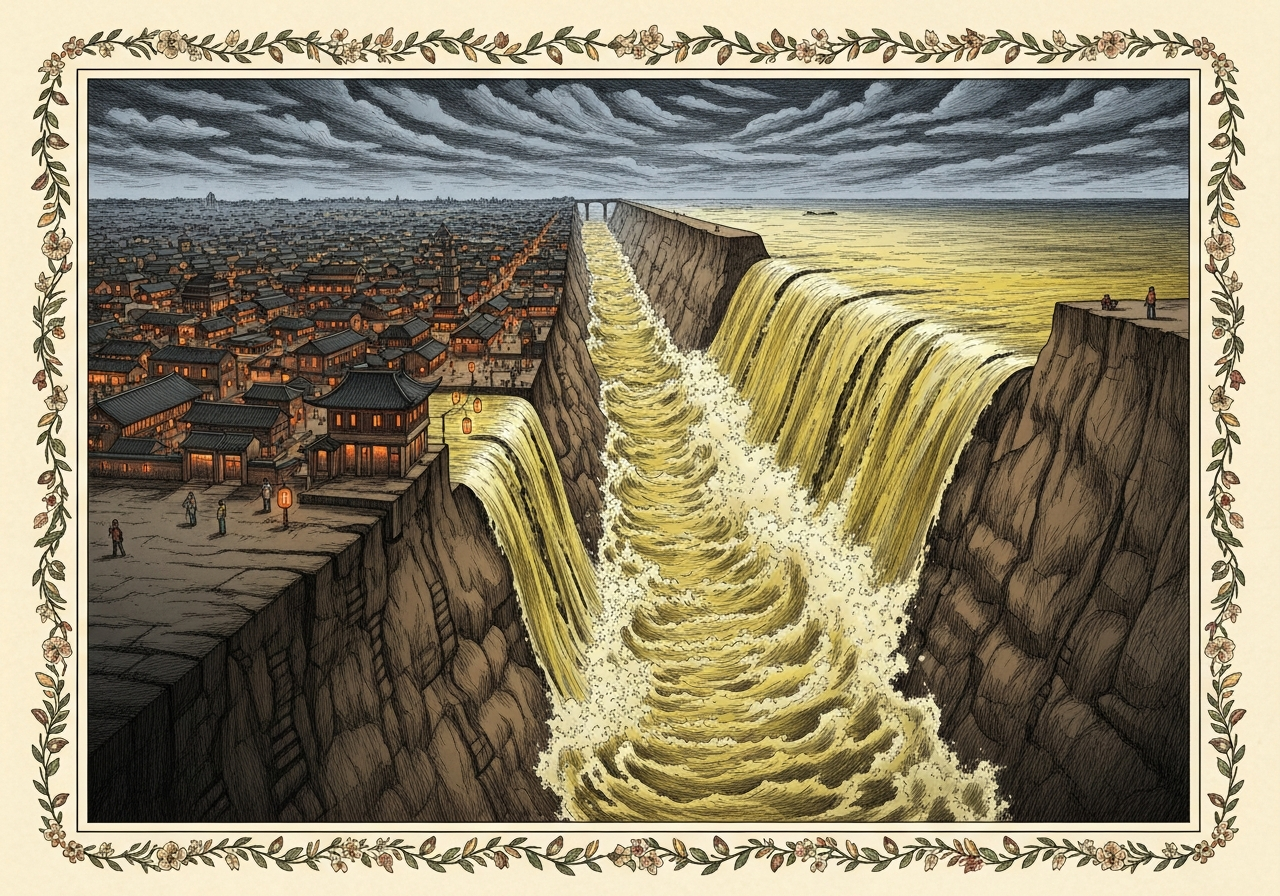
Over time, this positive feedback loop physically elevated the river above the landscape it was meant to sustain. The Yellow River became an "Earth Suspended River" (*xuanshui*). At the city of Kaifeng, the riverbed hovered 10 meters above the surrounding urban ground level, held back only by earthen walls[29] [34]. Maintaining this precarious equilibrium demanded ever-increasing resources. The state entered what environmental historian Ling Zhang terms a "hydraulic mode of consumption"—an institutional black hole that absorbed immense labor and capital without returning actual stability[35] [36]. By the late Qing dynasty, the state was forced to spend up to 15 percent of its annual national revenue just to maintain the dikes[37] [38].
The critical threshold was breached on June 19, 1855. Swollen by heavy rains, the river ruptured its elevated levees at Tongwaxiang[39] [40]. Pouring 2,500 cubic meters of water per second into the lowlands, the river completely abandoned its southern route to the Yellow Sea[39]. Over a span of months, it migrated 300 miles north to empty into the Bohai Sea, drowning countless villages, displacing millions, and fueling the Nian and Taiping rebellions that nearly toppled the empire[39] [41].
The catastrophic avulsion of 1855 was not a failure of Pan Jixun’s engineering; it was the inescapable, thermodynamic result of its success. By optimizing the river to perfectly satisfy a single aggregate metric—channel containment and velocity—the imperial state manufactured the precise geophysical tension that ultimately destroyed the system.