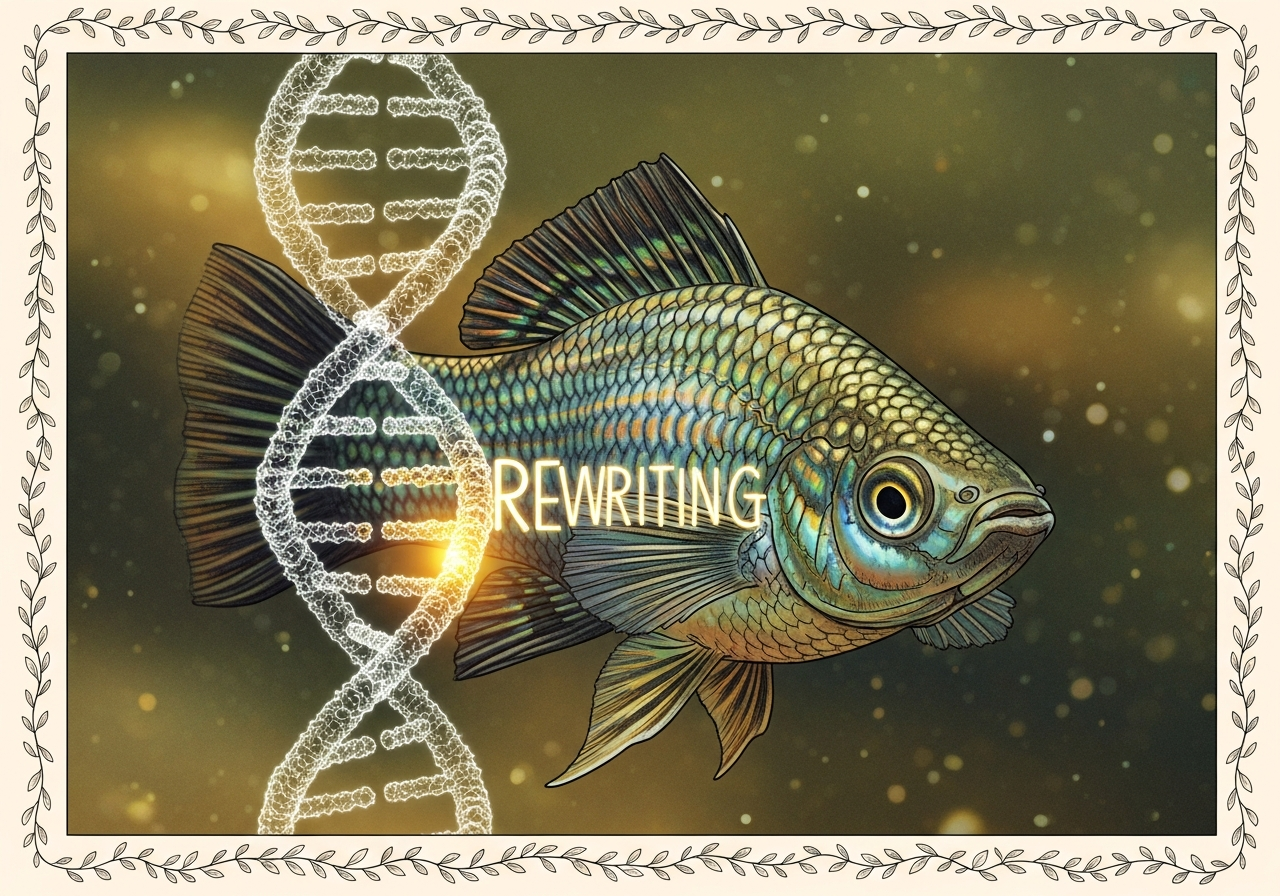
We are conditioned by the lore of scientific revolutions to anticipate the collapse of paradigms. When an anomaly appears on the horizon—a data point that refuses to neatly align with the established laws of nature—our instinct is to brace for an epistemological earthquake. We are taught that science and history progress primarily when foundational theories are proven wrong by accumulating counterexamples. Therefore, when astronomers identify a galaxy entirely devoid of invisible gravitational scaffolding, or biologists sequence the genome of a complex organism that has thrived for millennia without the genetic benefits of sexual reproduction, or archaeologists unearth carbon-dated bricks that push the origins of a complex civilization back by several centuries, the well-read observer expects the textbooks to be summarily rewritten. We expect the old rules to crumble.
Yet, a close examination of the bleeding edge of current research reveals a profoundly different reality. The universe, the biological world, and the human historical record are indeed littered with startling anomalies. We have found a galaxy, NGC 1052-DF9, that spins and shines without the dark matter that physicists insist is necessary to hold it together [1] [2]. We have mapped the genome of the Amazon molly (Poecilia formosa), an all-female fish that has cloned itself for a hundred thousand years, blissfully ignoring the evolutionary mandate that asexual lineages are doomed to rapid mutational decay [3] [4]. We have probed the deep stratigraphy of Mohenjo-daro, confirming that the Indus Valley metropolis was already a sprawling urban center by 3300 BC, long before theoretical models of human development suggest such complex infrastructure should have existed [5] [6].
These three recent discoveries, disparate in their subject matter, are united by a hidden logical architecture. In each case, the anomaly is ultimately resolved not by discarding the foundational theory—dark matter, the evolutionary benefit of sex, or models of gradual urbanism—but by identifying a highly specific, intervening process that explains the deviation. The foundational rules are not breaking; they are merely bending around highly contingent, extraordinary mechanisms. A galactic collision physically separates matter types; a novel gene-editing mechanism mimics the benefits of sexual recombination; a deeper, older, and more gradual developmental timeline explains an impossible city. The shared mechanism across these disciplines is the epistemological principle that a rule's validity is, paradoxically, confirmed by understanding the precise mechanics of its violation.