Tessera
Universe  ·  Life  ·  History
✦ The Universe◈ Life◉ Human History
The Hourglass Condition
April 11, 2026 — No. 5

The Hourglass Condition

The evolution of planets, life, and empires is dictated not by their resilience, but by their passage through a single, unforgiving gate.


The future doesn't branch; it squeezes through a single, unforgiving chokepoint.

Today’s source headlines

Scientists discover the "Goldilocks" secret behind life on Earth

Permian Fossil is Earliest Evidence of Rib-Powered Breathing

Shipping in Strait of Hormuz at a standstill despite US-Iran ceasefire

15 min read

Introduction

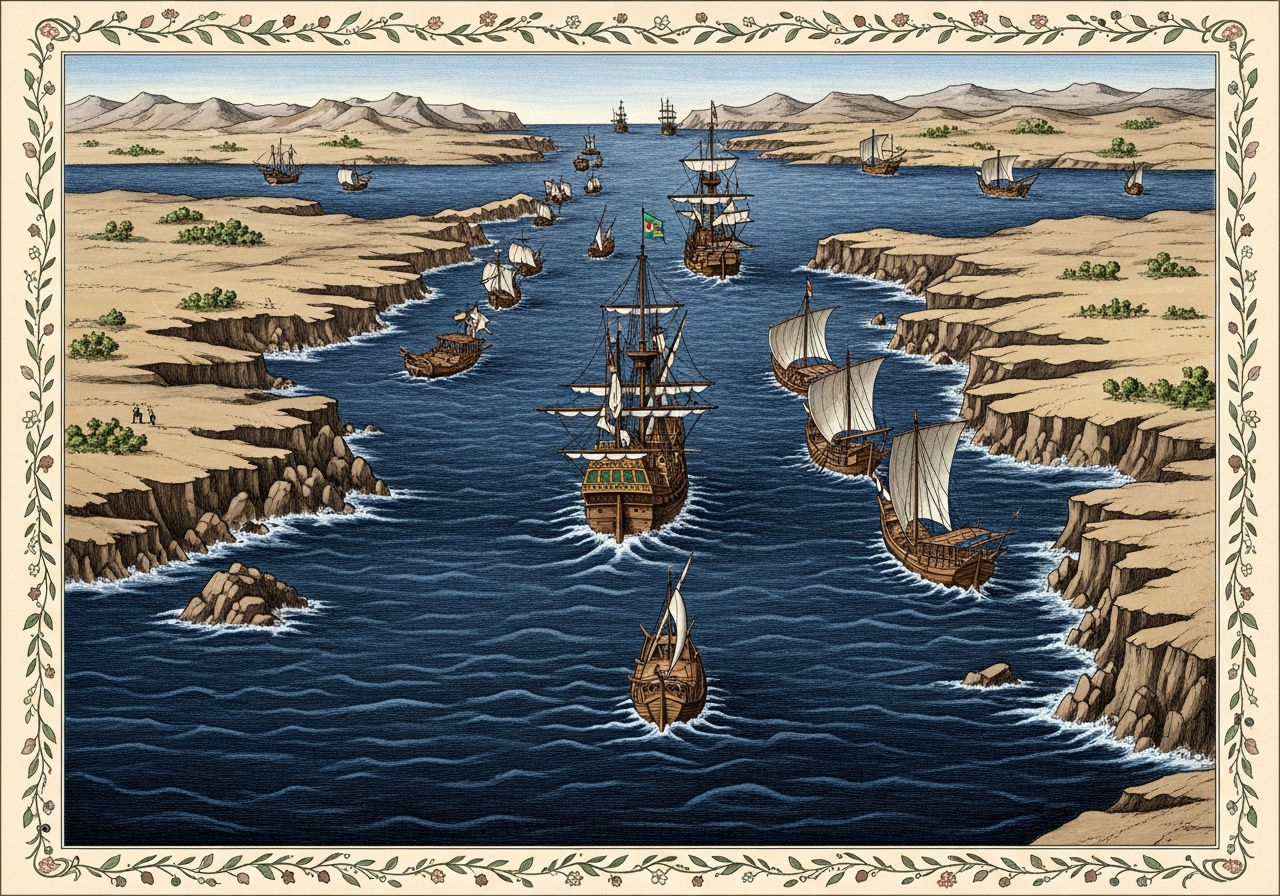
Despite a fragile ceasefire between the United States and Iran, commercial shipping in the Strait of Hormuz remains at a virtual standstill. The narrow channel, a lifeblood of the global economy, has become a geopolitical trigger, where the movement of a single tanker can dictate the stability of nations. This paralysis of a complex system by a simple geographic constriction feels distinctly modern, a vulnerability of our interconnected age. Yet the pattern it reveals—of a vast network held hostage by a singular, physical bottleneck—is ancient, echoing through the deepest corridors of time.

Hundreds of millions of years before the first ship sailed, another system faced a similar structural wall. In the early Permian, the evolution of terrestrial life was stalled, not by the challenge of walking on land, but by the physical impossibility of breathing efficiently enough to thrive there. A recently discovered 289-million-year-old fossil, a mummified reptile exquisitely preserved in an Oklahoma cave, reveals the precise anatomical key that unlocked this gate: the first-ever evidence of a ribcage capable of powering the lungs, a singular innovation that enabled the explosive diversification of all land-dominant vertebrates to come.

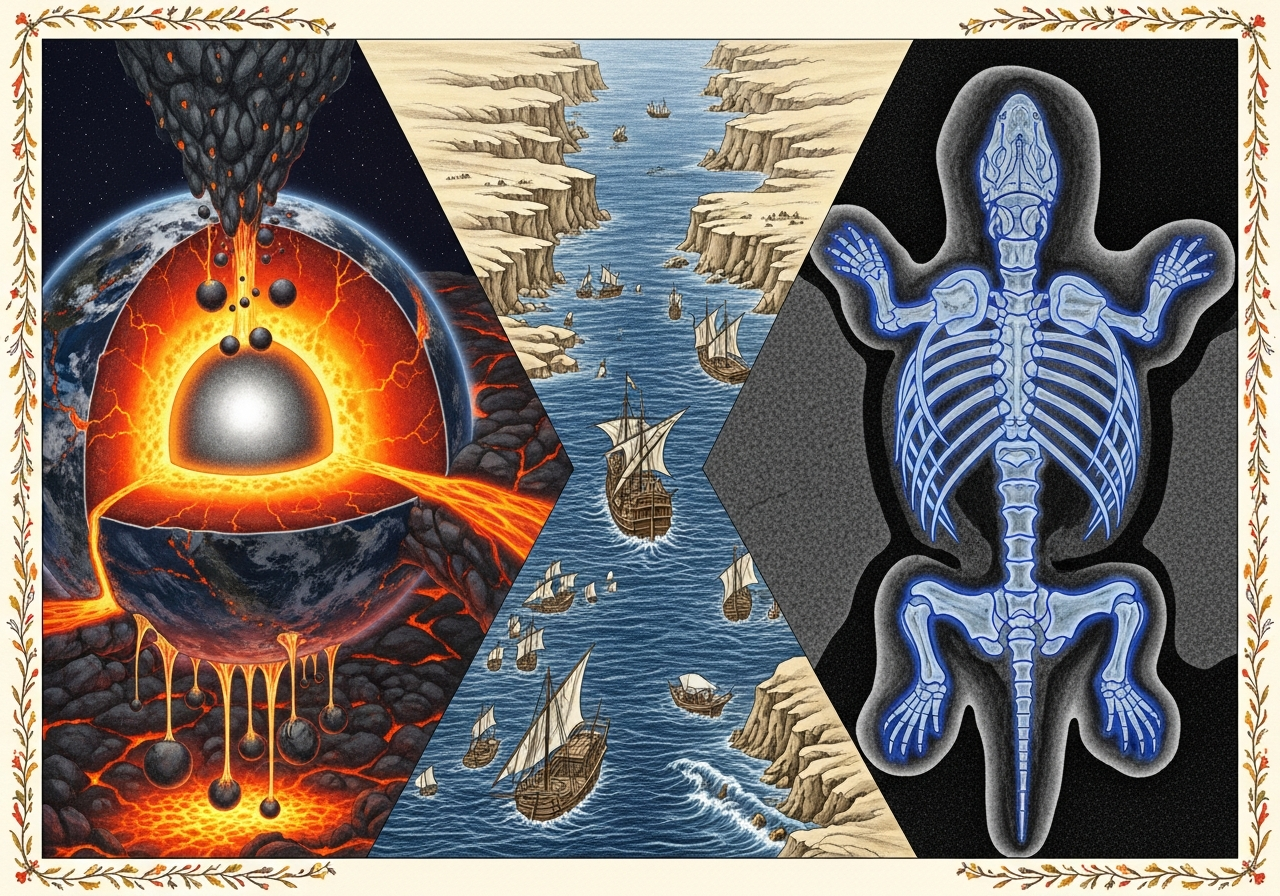
The chain of contingency extends back further still, to the violent birth of the Earth itself. New research into our planet’s core formation suggests that the very possibility of life was not a foregone conclusion of water and warmth, but the result of threading a microscopic chemical needle. Billions of years ago, as a global magma ocean churned, a precise, non-negotiable oxygen level had to be met to secure the essential elements for biology. A fractional deviation in either direction would have created a sterile world. A modern strait, an ancient ribcage, and a planetary crucible: three systems, separated by eons and scale, all pointing to the same profound and unsettling question about the nature of progress.
The Magma Chokepoint
The Universe

The Magma Chokepoint

Before a single cell could divide, the planet had to thread a microscopic, non-redundant needle, proving that the emergence of complexity relies not on robust redundancy, but on the flawless navigation of singular, physical chokepoints.

Astrobiologists have long treated planetary habitability as an equation of robust probabilities. Find a rocky planet in a star's orbital habitable zone, add liquid water, and wait. The conventional wisdom assumes that complex systems like planetary evolution and biological life are inherently resilient, with progress occurring through a branching tapestry of possibilities[1]. If one chemical or evolutionary pathway fails, the system is expected to adapt and find another across a broad front. But the cosmos does not operate through redundancy. At its most critical junctures, the future of a system is determined by its ability to pass through a singular, unforgiving structural gate.

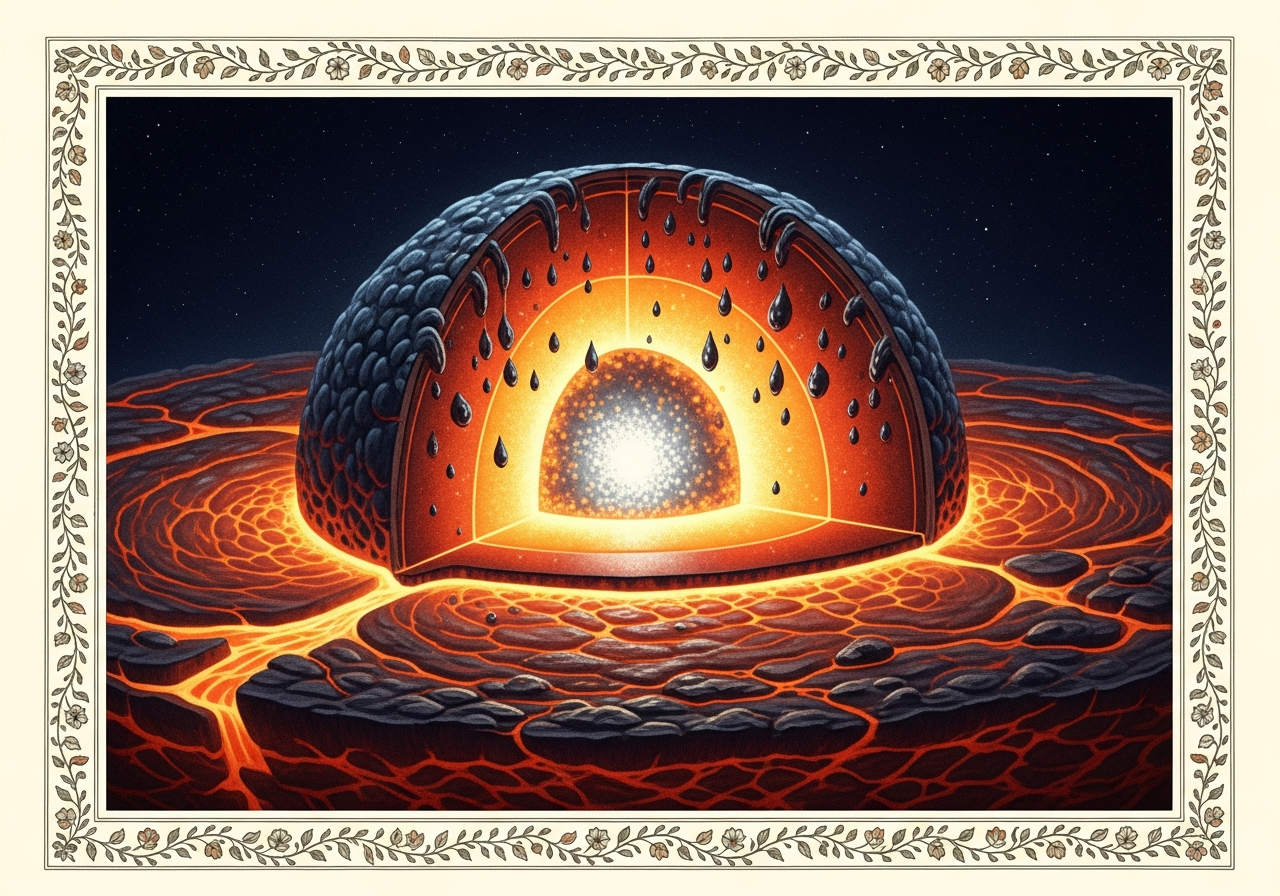
The first of these non-redundant chokepoints occurred 4.6 billion years ago, during the chaotic separation of the Earth’s core and mantle[2] [3]. As the young, molten Earth cooled, a planetary-scale sorting process took place. Gravity dragged heavy metals like iron inward to form the metallic core, leaving lighter silicate rocks to form the mantle and eventual crust. According to a February 2026 study published in Nature Astronomy by Craig R. Walton and Maria Schönbächler of ETH Zurich, the entire biological future of the planet rested on a single physical variable during this violent phase: the exact level of oxygen fugacity, or the oxidation state of the global magma ocean[4] [5].

Biology requires both phosphorus to construct the energy-carrying molecules of ATP and the backbones of DNA, and nitrogen to assemble the amino acids that build cellular proteins[1] [2]. However, the retention of these two elements represents competing chemical imperatives[6]. If the primordial Earth had formed with too little oxygen, the environment would have been highly reducing. Phosphorus, acting as a siderophile (iron-loving) element, would have bonded with heavy metals and vanished irreversibly into the planet's core[3] [5]. Conversely, if the planet formed with too much oxygen, the phosphorus would have remained safely in the mantle, but nitrogen would have become volatile, outgassing rapidly into the primordial atmosphere and bleeding away into the void of space[1] [2].

Walton and Schönbächler’s core-formation models demonstrate that there is no evolutionary workaround for this physical constraint[4] [7]. Earth successfully navigated this bottleneck only because it possessed a highly specific, moderate level of oxygen that prevented phosphorus from sinking while simultaneously anchoring nitrogen in the mantle[4] [5]. This narrow operational window—termed the "chemical Goldilocks zone"—is structurally rigid[2] [3]. Even a fractional deviation in initial oxygen levels would have yielded a world that might possess oceans and continents, yet remain fundamentally sterile, permanently locked out of prebiotic chemistry[1] [5].

This mechanism reveals a profound and counterintuitive fragility at the heart of complex systems. The persistence of terrestrial life was not guaranteed by the resilience of biological adaptation or the breadth of chemical possibilities[1]. Instead, the entire subsequent trajectory of Earth was entirely gated by a non-negotiable threshold of planetary chemistry. Before a single cell could divide, the planet had to thread a microscopic, non-redundant needle, proving that the emergence of complexity relies not on robust redundancy, but on the flawless navigation of singular, physical chokepoints.

The Thoracic Gate
Life

The Thoracic Gate

Complex biology is fundamentally fragile: millions of diverse branches on the tree of life owe their very existence to a single, localized structural triumph.

In the early Permian period, vertebrate evolution hit a physical wall. The transition from water to land is conventionally imagined as a broad, gradual march of adapting limbs and thickening skins—a triumph of generalized resilience. But locomotion was not the true barrier; respiration was. Early tetrapods were trapped by their own anatomy, relying on buccal pumping—swallowing air through continuous throat movements—and cutaneous respiration through permeable skin[15] [16]. This amphibian mechanism imposed a strict metabolic ceiling. Sustained, high-energy activity on dry land was simply impossible without an entirely new fluid-dynamic architecture to draw massive quantities of oxygen into the body[15] [17]. The future of terrestrial life was gated by a single, unforgiving structural bottleneck: the rigid ribcage[18] [19].

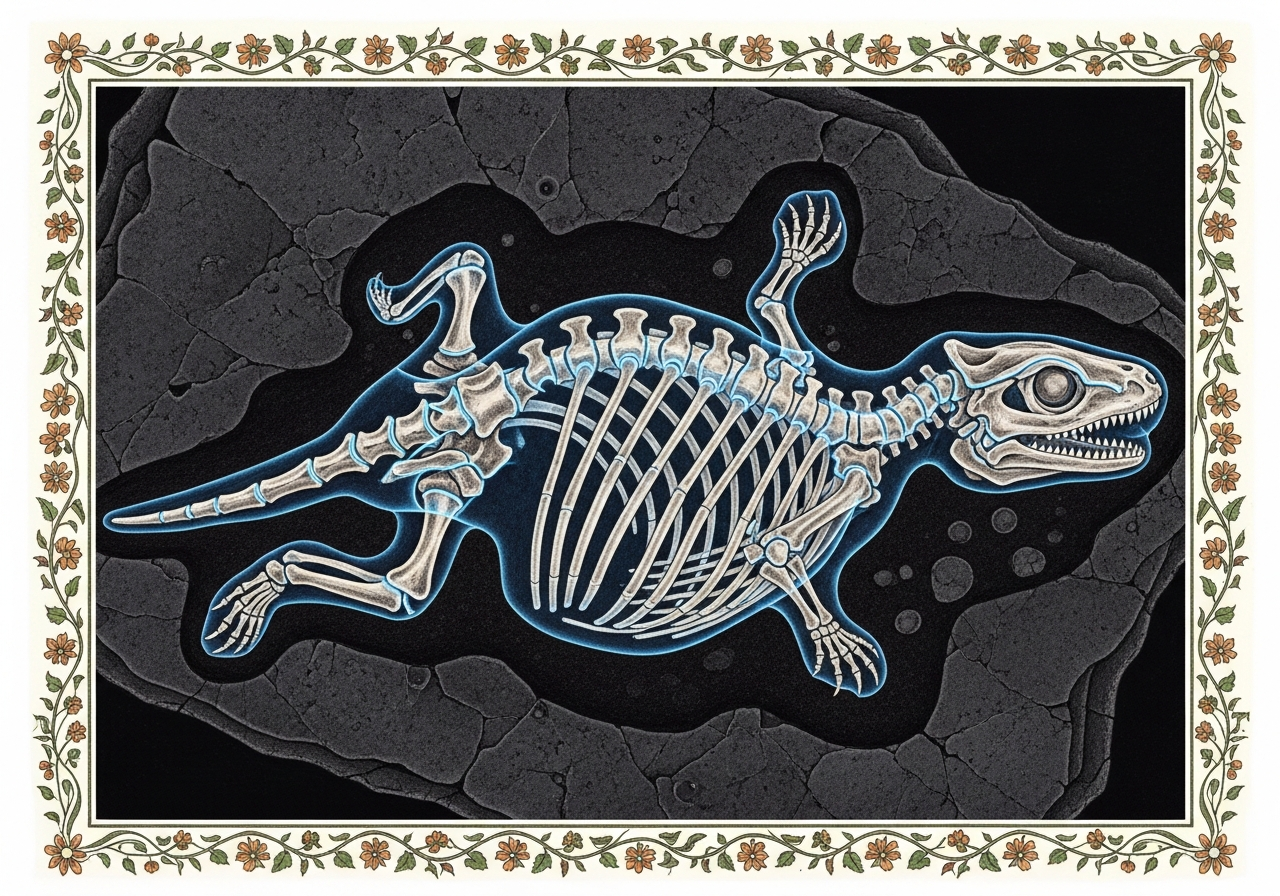
In April 2026, researchers mapped the precise moment this structural gate was breached. Paleontologists Ethan Mooney of Harvard University and Robert R. Reisz of the University of Toronto analyzed a 289-million-year-old mummified fossil of the early reptile Captorhinus aguti[18]. Discovered in the Richards Spur cave system in Oklahoma—where oxygen-starved mud and oil-seep hydrocarbons spectacularly halted bacterial decay—the palm-sized specimen preserved an unprecedented level of soft-tissue detail[15]. Alongside three-dimensional skin and calcified cartilage, it contained endogenous protein remnants dating nearly 100 million years older than any previously recorded[18] [20]. Most critically, high-resolution neutron computed tomography revealed an anatomical apparatus never before seen intact in a Paleozoic amniote[15] [17].

Wrapped within the animal’s torso was a complete, articulated thoracic skeleton: a segmented cartilaginous sternum, sternal ribs, intermediate ribs, and specialized cartilaginous extensions connecting the ribcage directly to the shoulder girdle[15] [19]. This intricate musculoskeletal scaffolding provides the earliest direct evidence of costal aspiration breathing[15]. Captorhinus had successfully abandoned the energetic inefficiency of throat-pumping[16]. Instead, it utilized intercostal muscles to actively rotate its ribs outward, mechanically expanding the chest cavity to create a powerful pressure vacuum that passively drew air deep into the lungs[15] [16].

This specific physiological innovation was not merely a gradual, parallel optimization across a wide evolutionary front; it was a non-redundant mechanical chokepoint. Without the evolution of costal aspiration, the terrestrial ecosystem as it exists today could not have materialized. This singular physical configuration freed the amniote skull from the morphological constraints of buccal ventilation, allowing jaw structures to adapt for complex predation[16] [17] [19]. Simultaneously, it provided the vast metabolic fuel required for sustained inland endurance[16] [17]. The entire subsequent trajectory of land-dominant vertebrates—the explosive diversification of reptiles, the sustained flight of birds, and the high-performance physiology of mammals—was entirely contingent upon passing through this precise anatomical gate[18]. Complex biology is thus revealed to be fundamentally fragile: millions of diverse branches on the tree of life owe their very existence to a single, localized structural triumph.

The Cartaz Bottleneck
Human History

The Cartaz Bottleneck

The Portuguese interlude proves that the genesis of global commercial systems does not resemble a branching, redundant tree, but rather an hourglass.

In 1509, Afonso de Albuquerque assumed governorship of the Estado da Índia, inheriting a marginal European kingdom’s audacious bid to circumvent the Venetian-Mamluk monopoly on Eurasian trade[25] [26]. Rather than attempting to conquer vast, unmanageable Asian hinterlands, Albuquerque deduced that the sprawling, seemingly resilient network of Indian Ocean commerce—a complex web linking East Africa, the Persian Gulf, and the South China Sea—was structurally bottlenecked at just three physical chokepoints: the Strait of Malacca, the Bab-el-Mandeb Strait at Aden, and the Strait of Hormuz[27] [28]. His strategy recognized that economic complexification would not evolve through broad adaptation or territorial expanse, but through the capture of non-redundant geographic gates[28] [29].

Between 1507 and 1515, Portuguese naval forces executed this targeted geographical lock-in. In 1511, Albuquerque stormed Malacca, the narrow strait gating the Far Eastern spice trade[27] [30]. In 1515, he captured the island of Hormuz, an arid but indispensable entrepôt that forced all maritime traffic between the Indian Ocean and the Persian Gulf through a sliver of navigable water[31] [32]. As historian C.R. Boxer established in The Portuguese Seaborne Empire, this strategy transformed Portugal into a global hegemon by turning the ocean into infrastructure, substituting territorial land ownership for the absolute control of movement[33] [34]. The entire evolutionary path of 16th-century global trade was suddenly dictated by the physical properties of a few miles of seawater[28] [29].

To enforce this structural gate, the Portuguese implemented the cartaz system. Historian Michael Pearson’s research on maritime history notes that this institutionalized mechanism forced Asian, Arab, and Persian ships to purchase safe-conduct passes and pay customs duties at Portuguese-controlled ports[35] [36]. Without a cartaz, a ship and its cargo were subject to immediate confiscation or destruction by naval patrols[36] [37]. This legal-military technology artificially engineered a system-wide fragility: the organic, decentralized Indian Ocean economy was entirely funneled through a strict, unforgiving geographic aperture[36] [38].

The profound fragility of this bottlenecked system was exposed when the Portuguese failed to secure Aden, the third required chokepoint controlling the Red Sea[27] [32]. Exploiting this single unclosed gate, the Ottomans deployed a fleet of 100 ships down the Red Sea in 1538, occupying Aden and effectively fracturing the Portuguese monopoly[36] [39]. Decades later, during the 1552 Ottoman campaign, Admiral Piri Reis besieged Hormuz, demonstrating that the structural gates governing global trade were as vulnerable to targeted geopolitical disruption as they were profitable[27] [40].

The Portuguese interlude proves that the genesis of global commercial systems does not resemble a branching, redundant tree, but rather an hourglass. The future trajectory of the Estado da Índia, and the subsequent Dutch and British empires, was entirely determined by the ability to hold singular, narrow gates[41] [42]. The geopolitical history of Hormuz, extensively studied by scholar Guillemette Crouzet, reveals that the persistence of a complex economic system hinges not on its overall scale or robustness, but on the successful navigation of unforgiving physical constrictions[32] [43]. When a system's complexification depends entirely on a singular geographic channel, it remains fundamentally fragile, no matter how vast its eventual reach.

The Synthesis

The Hourglass Condition

The magma ocean, the thoracic cage, and the maritime strait are not disconnected phenomena but different manifestations of the same fundamental mechanism: the structural bottleneck. The conventional wisdom holds that complex systems—whether biospheres, ecosystems, or economies—evolve through broad, resilient adaptation, with redundancy providing a safety net against failure. But the evidence presented reveals a far more fragile and deterministic architecture. The "chemical Goldilocks zone" was a non-negotiable physical gate for prebiotic chemistry. The evolution of costal aspiration was a singular biomechanical solution that unlocked the metabolic potential of an entire class of animals. The Portuguese capture of Hormuz demonstrated that a sprawling economic network could be controlled by seizing a single, non-redundant geographic channel. At their most critical junctures, these systems did not branch; they were funneled.

This pattern leads to a falsifiable prediction. At critical junctures, the future trajectories of complex systems are determined not by their overall robustness, but by their ability to pass through a single, narrow, and often unforgiving structural gate, revealing a profound and counterintuitive fragility. This principle suggests that in our search for extraterrestrial life, we should look not for general habitability but for evidence of planets that have successfully navigated a precise series of chemical and geological chokepoints. It implies that in our own history, the rise and fall of civilizations may be better explained by their control over or failure to secure physical bottlenecks than by their cultural or economic breadth.

The most robust critique of this model argues that it mistakes a single successful outcome for the only possible one. It’s a form of survivorship bias: while these specific gates were passed, complex systems are inherently creative. Had Portugal failed at Hormuz, another power would have found another route; had Captorhinus not evolved costal aspiration, another lineage might have developed a different high-efficiency respiratory system. The system, in other words, has redundancy, even if the successful path does not.

But this objection misinterprets the nature of the constraint. The chokepoint model does not claim that no other solution is theoretically possible, but that for a system with a specific physical and historical configuration, the gate is singular and non-negotiable. The chemistry of Earth’s core formation was governed by immutable physical laws, not evolutionary choice. The amniote body plan, once established, could only escape its metabolic trap through a specific biomechanical innovation; there was no parallel, equally viable path available to it at that moment. And for a 16th-century naval power reliant on sail and cannon, the geography of the Indian Ocean was not a suggestion but a physical absolute. The connection survives because these gates are not just difficult passages but structural laws that dictate the future architecture of the entire system that passes through them.